
Do More Moving Parts Mean More Maintenance??!!
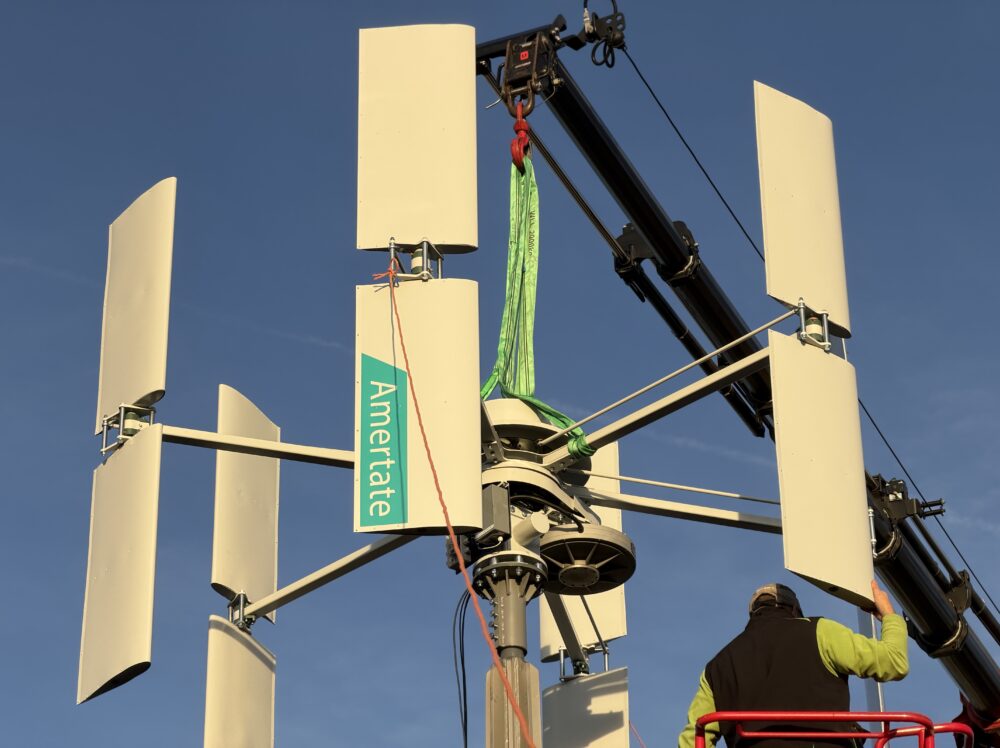
Do More Moving Parts Mean More Maintenance in Small Wind Turbines?
When evaluating a small wind turbine, one assumption often comes up:
More moving parts must mean more maintenance.
It sounds logical. But in wind turbine engineering, the number of moving parts is only one part of the equation. How fast those parts move, the forces they experience, and how the turbine captures energy can be even more important.
Why Rotational Speed Matters
Wind turbines convert aerodynamic energy into mechanical rotation and ultimately electricity.
In simple terms:
Where: P = mechanical power (W), τ= torque (N·m), and ω = angular velocity (rad/s).
Many conventional small wind turbines depend on relatively high rotational speeds to produce useful power. Depending on the turbine and operating conditions, rotational speeds can reach several hundred RPM or more.
But increasing rotational speed also increases the mechanical forces acting on the turbine.
One particularly important factor is centrifugal force. As rotational speed increases, centrifugal loading on rotating components increases rapidly. Over years of operation, these loads can contribute to stress, fatigue, bearing wear and blade-related maintenance.
This is particularly important for small wind turbines expected to operate for years in changing weather conditions.
What If We Increase Torque Instead?
There is another way to generate power: capture more torque from the wind while keeping rotational speed lower.
This is one of the fundamental ideas behind Amertate’s patented variable-pitch vertical axis wind turbine (VAWT) technology.
Instead of keeping the blades at a fixed angle, the blade angle changes during each revolution.
The variable-pitch mechanism helps optimize the angle of attack of the blades as they rotate around the turbine.
The objective is simple:
Capture more useful aerodynamic force → generate higher torque → operate at lower rotational speed.
This becomes especially important in low and fluctuating wind conditions, including locations with average wind speeds around 3–5 m/s.
High Torque. Low Speed.
Amertatey’s turbine combines aerodynamic principles with variable-pitch technology to create a high-torque, low-speed wind turbine.
The turbine’s rotational speed is limited to approximately 90 RPM.
Lower rotational speed means several times lower centrifugal loading on the blades and other rotating components compared with high-speed turbine architectures.
This provides several important engineering benefits:
- Lower mechanical stress on turbine blades
- Reduced centrifugal loading several times
- Lower rotational speed of mechanical components
- Reduced wear on bearings and other components
- Longer mechanical lifetime
- Lower maintenance requirements
- Safer and more controlled operation in high winds
- Gentle operation suitable for residential areas
Our prototype testing and results from customer installations have demonstrated and validated these benefits under real-world operating conditions.
So, Do More Moving Parts Mean More Maintenance?
Not necessarily.
A variable-pitch system introduces additional mechanical functionality, but looking only at the number of moving parts misses the bigger engineering picture.
If that mechanism enables the entire turbine to capture more torque and operate at substantially lower rotational speeds, it can also reduce some of the major mechanical loads experienced throughout the turbine’s lifetime.
Good engineering is therefore not always about having the fewest moving parts.
It is about managing forces, movement and energy efficiently.
For Amertate, variable-pitch technology allows us to pursue exactly that: a small wind turbine designed to capture energy efficiently while operating slowly, quietly and with lower mechanical stress.
More torque. Lower RPM. Lower mechanical stress. Longer lifetime.
That is a different way of thinking about small wind energy.
#SmallWindTurbine #WindEnergy #VAWT #VerticalAxisWindTurbine #VariablePitch #RenewableEnergy #DistributedEnergy #WindTurbineTechnology
