
AMT6000 Wind Turbine Blade Load Test
The Ultimate Frontier of Resilience in the Heart of the Arctic: A Major Triumph for Amertate’s AMT6000 Blades
How did six months of relentless engineering transform an earlier failure into a historic leap forward in next-generation wind turbine development?
Introduction: When Simulation Meets Unforgiving Reality
In deep-tech hardware development, particularly in the wind energy industry, the gap between elegant software models and the real world can only be bridged through testing, steel, and aluminium. However accurate finite element analysis (FEA) and computational fluid dynamics (CFD) simulations may be, nature makes no allowances during the fierce storms of polar winters. High-speed winds, punishing ice, and continuous dynamic fluctuations put structures to an unforgiving test.
At Amertate, we have not chosen the easy path. Our fundamental belief is that reliability and safety are not created behind closed doors through assumptions on paper. They must be validated in the laboratory, under the watchful eye of precision measuring instruments and beneath hundreds—even thousands—of kilograms of applied load.
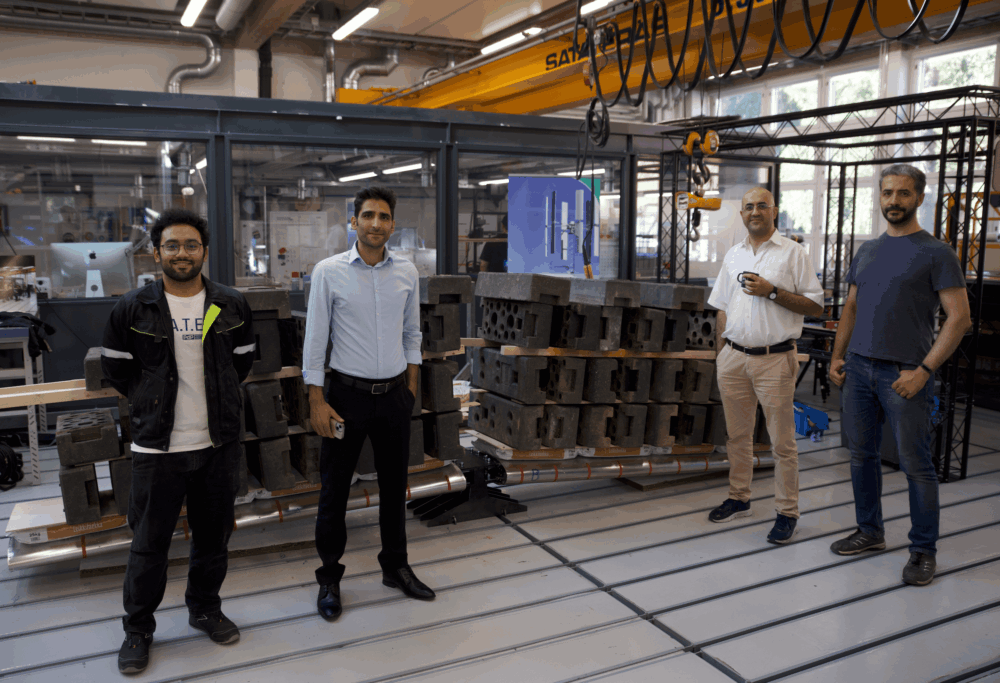
Recently, our team completed a decisive and historic wind turbine blade load test at one of Europe’s most respected engineering innovation environments: Aalto Design Factory at Aalto University in Espoo, Finland.
Inside the Blade: Aluminium, Steel, and Engineering Complexity
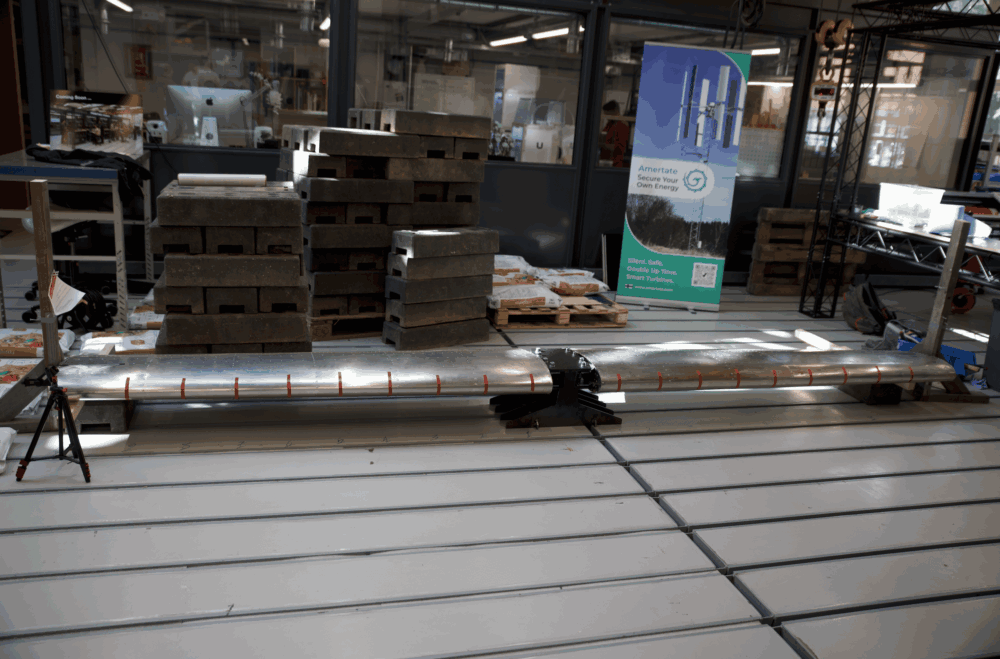
Our new vertical-axis wind turbine (VAWT) stands apart from conventional market designs through its distinctive structure. This powerful machine features variable-pitch blades, designed to deliver the highest possible self-starting capability and the smoothest possible aerodynamic torque, even in turbulent urban and coastal winds.
But the real engineering challenge lay within the blade itself:
- All-aluminium shell: To minimise weight and rotational inertia while maintaining exceptional resistance to atmospheric corrosion, the blade shell is made entirely from a specialised aluminium alloy, with complex forming and carefully refined aerodynamic geometry.
- Heavy-duty steel root connection: The blade root connection, where bending stresses become intensely concentrated, was designed using robust structural steel with specific metallurgical properties for impact toughness at −40°C, protecting it against risks such as cold brittleness.
- Design and manufacturing complexity: Bending, positioning internal longitudinal spars to distribute shear stresses, and maintaining millimetre-level tolerances at the aluminium-to-steel connection have made these blades an engineering and manufacturing achievement involving formidable production challenges.
A Proud Earlier Achievement: The “Zero-Noise” Acoustic Test
One of the greatest challenges for small wind turbines near residential areas is noise pollution and blade whistling in strong winds. Before entering this mechanical test, our blade had already successfully passed rigorous field acoustic testing: the test recorded almost zero noise emissions during operation.
This acoustic stillness was the result of months of meticulous optimisation of the trailing-edge contours, profile thickness, and airflow separation control. Now, the blade that operated in silence had to prove that it could also remain steadfast and unyielding under severe loading.
Six Months of Engineering: Turning Failure into Progress
On the path towards technology at the frontier of knowledge, no validation comes without a cost. During the first round of earlier load tests, the blade experienced premature local yielding and failed to meet the intended extreme-load targets.
In the world of innovation, this is the crossroads where the timid stop and true engineers reach for their tools. For us, the first-stage failure was not a retreat; it was an opportunity to dissect the data.
Amertate’s dedicated team of aerodynamic and structural design specialists joined forces for an intense, demanding six-month engineering marathon. During those six months:
- The internal spars were redesigned and their behaviour simulated again, allowing localised loads to be transferred directly into the blade’s structural backbone rather than its edges.
- The load distribution system in the root clamp was revised to control stress concentrations around the bolts.
- Further weight reduction and aerodynamic geometry optimisation made the blade lighter and ready to face the ultimate load.
The Decisive Trial: Destructive Testing at Aalto Design Factory
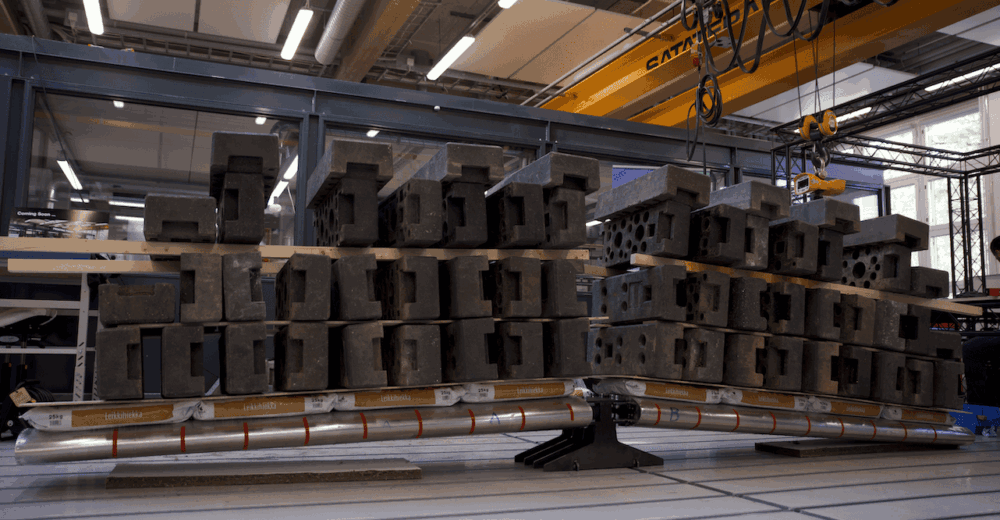
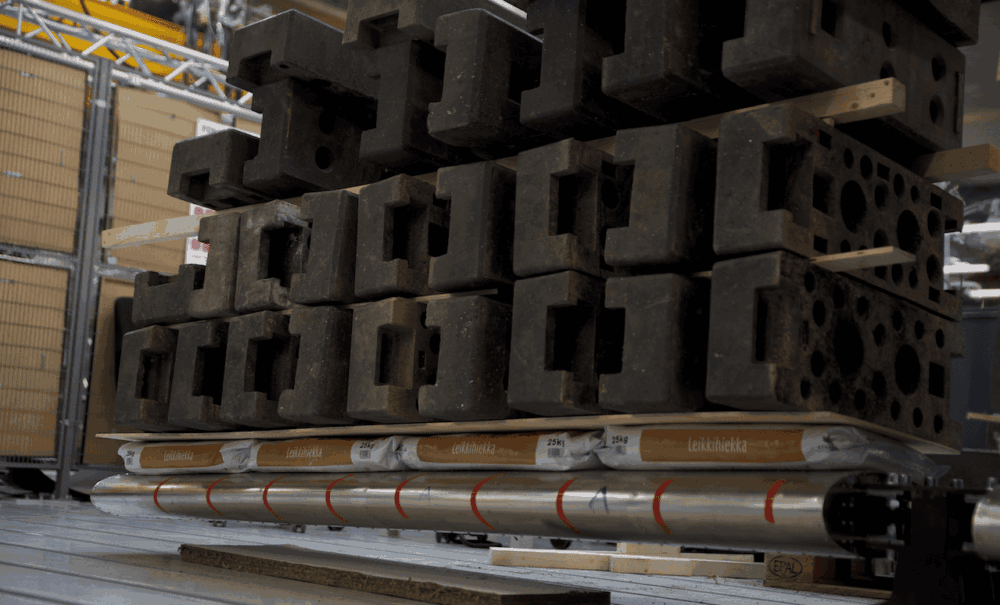
Why is this test so difficult and complex? Manually placing hundreds of kilograms of weights while maintaining perfect symmetry across two suspended blade halves, without damaging the sharp aluminium edges, required the design of a unique loading platform.
- Precise load distribution: Sandbags were used as the first layer to conform closely to the airfoil’s curvature, followed by calibrated loading blocks arranged on load-transfer boards.
- Millimetre-level monitoring protocol: Precise digital measurements tracked the distance between the blade tips and the reference floor, alongside continuous inspection of the witness marks on the connection bolts.
The load increased step by step, from zero through progressively higher stages:
- In the initial stages, the structure displayed outstanding linear, elastic behaviour. The bolts remained firmly locked, without the slightest slippage.
- As the load increased, the blades bent beneath hundreds of kilograms of weight, yet stood firm.
- Finally, at Stage 7—extreme loading—we reached a dramatic engineering moment: one blade yielded and broke after absorbing an enormous amount of energy, while the opposite blade resisted the immense load and remained intact until the very end.
After unloading, the intact blade showed more than 45 mm of elastic recovery, providing compelling evidence of its high energy absorption and structural ductility.
What Comes Next: Fatigue Testing and a Larger 10 kW Blade
The lessons captured through this detailed documentation form the foundation of our future development:
- Designing and building a dedicated fatigue testing machine: In close and valued collaboration with Aalto University, we are now designing and developing an advanced fatigue testing machine. By simulating millions of oscillating load cycles, we aim to validate the blades’ fatigue life for decades of continuous operation in freezing conditions.
- Towards a giant blade for a 10 kW wind turbine: The lessons from these six months and the invaluable data gathered in the test hall will feed directly into the next generation. Soon, we will return to the same testing ground with a larger blade for a 10 kW wind turbine, featuring a design that is lighter, more refined, and more reliable than ever.
Acknowledgements and Conclusion
This major achievement would not have been possible without the tireless efforts of Amertate’s technical team, the unwavering determination of our engineers, and the generous support, testing facilities, and inspiring environment provided by our colleagues at Aalto University and Aalto Design Factory. We sincerely appreciate this scientific and technical collaboration.
The AMT6000 blade’s static load testing chapter has closed with pride. But for Amertate, this is only the beginning of a fast-moving new chapter in the future of renewable energy.
We have pushed the boundaries back—and tomorrow, with stronger blades, we will once again rise to meet the storms.
